Subtropical conditions in Palm Beach County create year-round arachnid activity that standard over-the-counter pyrethrin sprays fail to resolve. Striped bark scorpions and southern house spiders utilize dense…
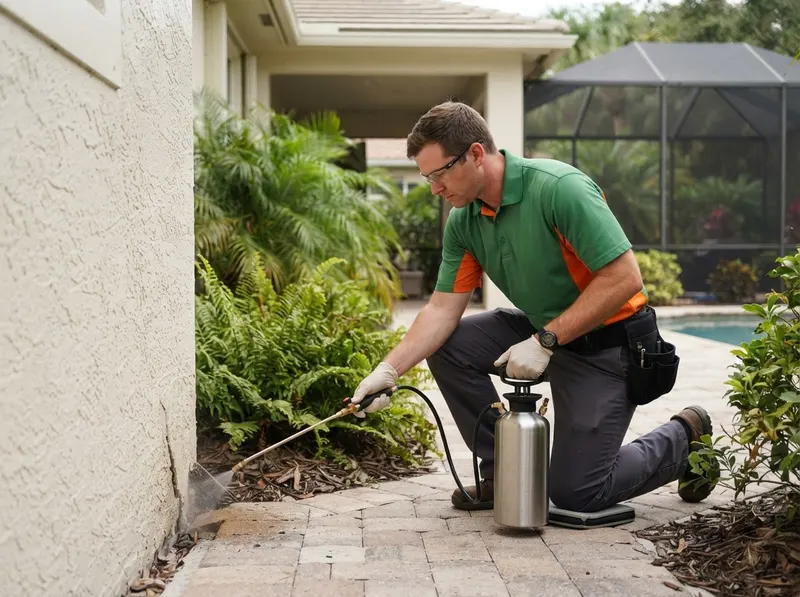
Subtropical conditions in Palm Beach County create year-round arachnid activity that standard over-the-counter pyrethrin sprays fail to resolve. Striped bark scorpions and southern house spiders utilize dense landscaping, decorative rock beds, and mulch borders to establish nesting zones within inches of structural foundations. Properties located near equestrian canal networks or expansive preserve borders, such as those throughout Palm Beach Point and Grand Prix Village, face constant inward pressure from arachnids seeking shelter during seasonal rain shifts. Dense equestrian bedding and tack storage environments offer ideal moisture levels for bark scorpions, making precise perimeter exclusion critical to keeping living quarters secure.
Residential communities such as Olympia, Versailles, and Binks Forest frequently encounter black widows and wolf spiders nesting inside covered lanais, pool pump enclosures, and garage entry points. Spiders possess distinct physiological traits: their bodies stay elevated above treated surfaces on long legs, reducing contact with dry chemical residues, and their predatory feeding habits mean they do not groom their limbs or ingest surface treatments like roaches or ants do. Resolving a persistent infestation requires mechanical web removal, direct contact applications using microencapsulated suspensions that cling to arachnid leg hairs, and strict reduction of the secondary insect populations that serve as their primary food supply.
Interior treatments focus strictly on harborage zones, avoiding blanket chemical sprays across exposed flooring. Technicians apply targeted dust formulations behind baseboards, beneath heavy utility appliances, and inside attic access points where scorpions hide during daytime hours. In properties like Sugar Pond Manor, Greenview Shores, Meadow Wood, and the Wellington Aero Club, treatments account for domestic pets and tight flight schedules, utilizing low-odor, botanical-derived compounds and targeted residuals that dry within 60 to 90 minutes. A single exterior treatment creates an immediate 30-day perimeter barrier, whereas full disruption of multi-generation spider populations on large parcels typically requires two synchronized visits spaced 21 days apart.
Every job gets a firm, written price after a free on-site visit.
Tell us about your spider and scorpiones control job in Wellington and we'll send a clear, written quote, usually the same day.
 Wild Basin Pest Control